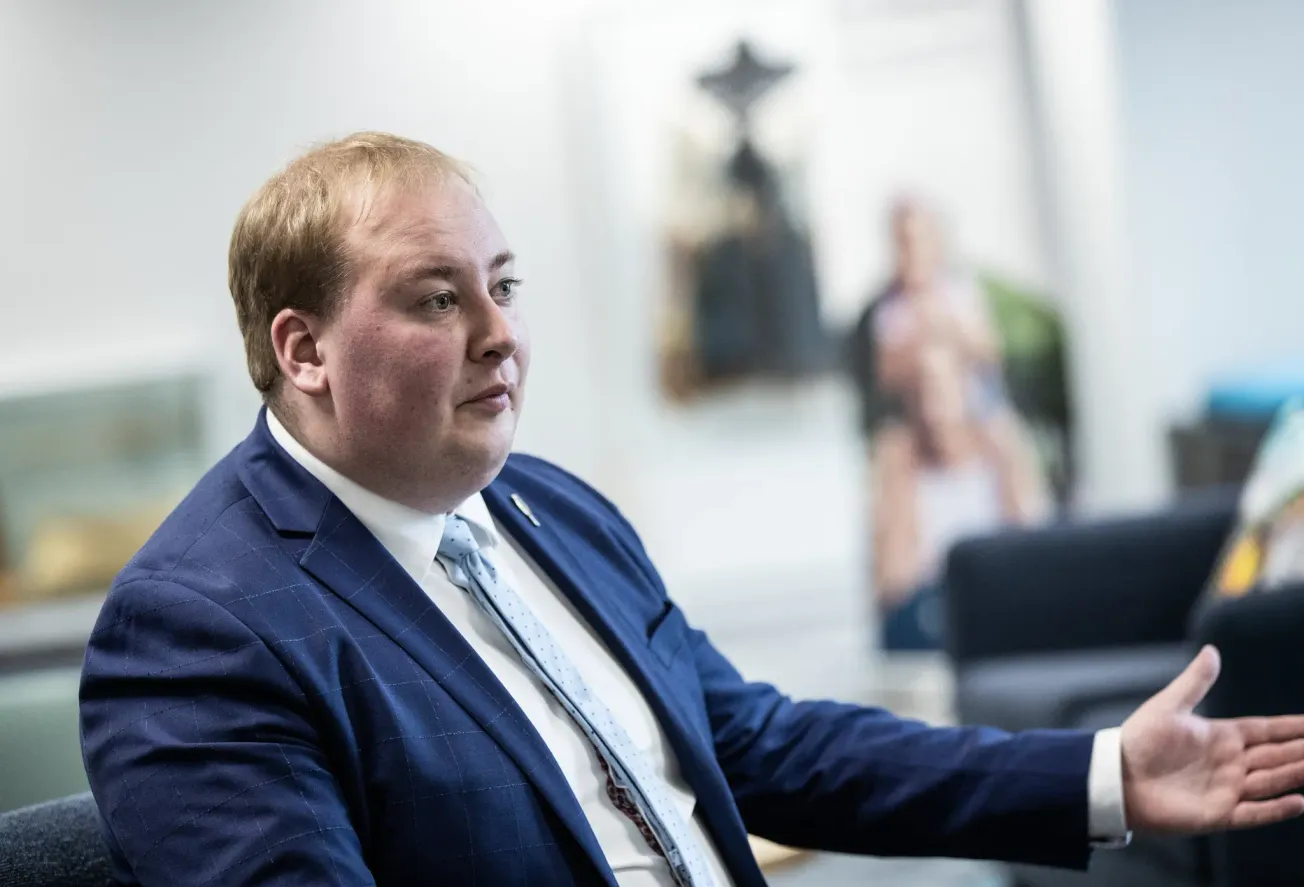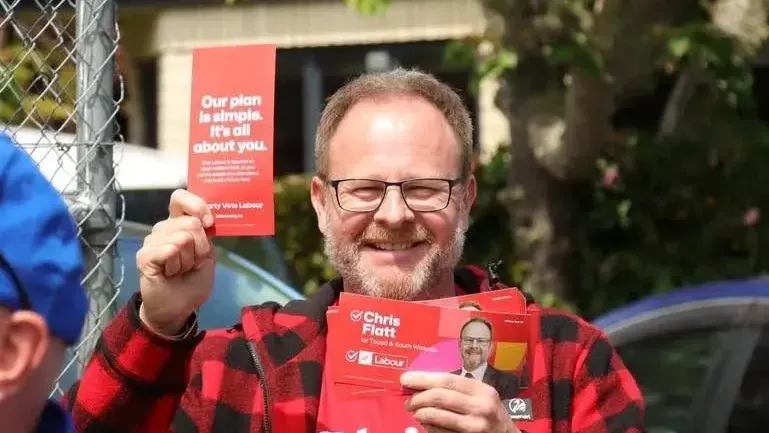
Labour's Taupō candidate is under no illusion knocking National's six-term MP off her perch is an easy task, but says he's up for the challenge.
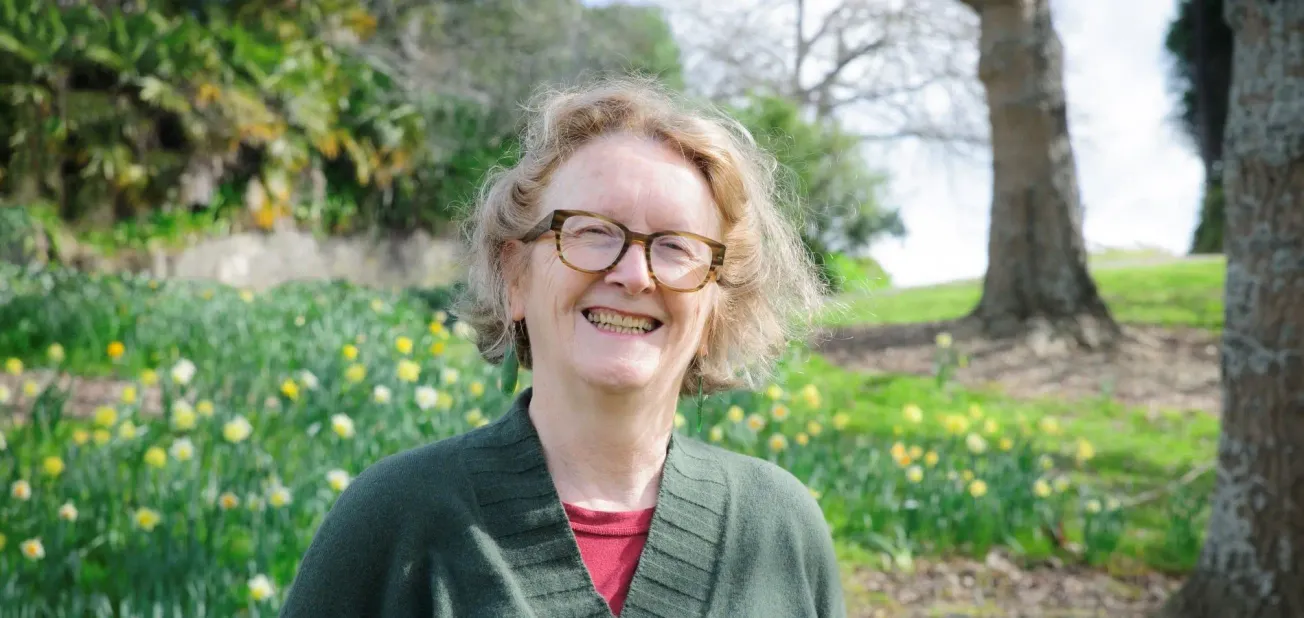
Incumbent MP Louise Upston has held the Taupō seat for six consecutive terms since defeating Labour’s Mark Burton in 2008. Since then, Labour has put up Francis Campbell, Jamie Strange, and Aladdin Al-Bustanji.
Labour’s 2026 Taupō champion is Chris Flatt, the NZ Dairy Workers Union national secretary.
From South Auckland to Finland
Flatt is the son of blue-collar Londoners who survived the Blitz to arrive in Aotearoa in the 1960s. His mother found work in the banking sector, eventually becoming a union delegate while his father worked for Air New Zealand.
He says his parents were not part of any political party but the values they raised him with eventually orientated him towards workers’ rights and politics.
“We were raised to fight for our rights because they [his parents] had seen what the class system had done in England,” Flatt says.
“One, we talked politics and religion. Two, we stood up for the rights of fairness and a fair go.”
Eventually he’d spend one of his high school years on exchange in Kangasala, Finland. Living in a town of 16,000 with a large state-funded clinic and free school lunches had a lasting impact on young Flatt.
“They just didn’t think anything of it, right?” he says.
“High taxes, but they got a distributive system back.”
After returning to New Zealand, he headed to Waikato University, where he started in economics, then changed.
In his opinion, economics was “captured” by the right wing, “so I transferred into industrial relations and politics”.
Becoming an industrial relations lawyer gave him the opportunity to work in the corporate sector and for unions both in NZ and Australia.
Flatt also served as Labour’s General Secretary from 2009-2012 and currently sits on the party board.
Coping with economic changes
While remembering past jobs with guaranteed work, overtime on weekends and holidays, Flatt is under no illusion that the good old days are coming back.
He made no promises to reopen the plywood plant and paper mill in Tokoroa, saying that under a capitalist system companies would always seek the cheapest option.
“Our kids have just exited, they’ve just left to go overseas because they don’t see the jobs,” he says.
The Government he says, needs to support workers and companies through those turbulent changes.
“We have to have a better value proposition to keep jobs here.
“What I’d like to see again is active transition planning.”
Flatt cited the example of the Latrobe Valley in Victoria, where several coal-fired power stations are closing down.
Efforts are being made to get workers into alternative jobs before the shutdowns.
“The next step I think, and there’s no magic solution to this, but there’s vocational training work."
He says the current government had taken away resourcing and back-end infrastructure to increase vocational training and that needed to be rectified.
But the elephant in the room, he says, is the price of energy.
‘Massive reform of energy’ needed
Flatt says energy prices are too high and something needs to change.
“We know [with] the mills that first and foremost those closures [are] often around sustainable priced energy,” he says.
“We need to review the energy sector, not just for domestic prices, but we also need to review it for businesses.”
Labour’s proposed Future Fund would take profits from state-owned enterprises to create an investment fund. Profits from the investments would pay for future state capital investments.
Flatt recalled a conversation with the Geothermal Association in which they said, “We need consistent (power station) development projects and timelines.”
Building power stations on a piecemeal basis led to job losses and reduced capability, he says.
“So we go through projects where we have expansion of a new site,” he says.
“There’s nothing for a period of time, and you lose your workforce to overseas communities.”
The Future Fund could fund NZ’s future power stations, he says.
Labour’s plan to reduce household bills is their Solar Saver policy. Low-middle income homeowners, along with renters, will have access to low interest finance options for solar panels on their roofs.
The panels are paid for through the savings incurred by feeding back into the power grid.
Alongside Louise Upston, Flatt is up against:
- Celine Kearney, Greens
- Itania Nikalao, Independent
- Sam Plummer, Opportunity Party
- Gordon Wilson, NZ Loyal
Early voting has begun, and the final day for voting is November 7.