Taupō District Council has moved its Head Start council meeting back a week to allow more time to gather the complex financial and non-financial information needed to analyse each option.
The council decided on Tuesday, June 30 that it would look closely at four different options for local government reform. A follow up meeting set for Tuesday, July 21 to decide on a preferred option has now been moved to 10.15am on Tuesday 28 July, it said in a release last week.
The delay is to allow extra time for work to be completed so that councillors can give the matter the "fullest possible consideration."
The four options
The four options basically are: a single unitary Waikato authority (based on the current boundary of the Waikato Regional Council), a Central North Island unitary authority (Ruapehu, Waitomo, Ōtorohanga, South Waikato and Taupō districts), a Rotorua, Great Lakes, and South Waikato unitary authority (Rotorua Lakes, Ruapehu, South Waikato and Taupō districts) or do nothing and for the government to decide Taupō's fate in the Back Stop process.
Central government announced on May 5 that councils had three months to submit a Head Start proposal to amalgamate with other councils in their region to form unitary authorities.
Mayor: "concerned about the narrow timeframe"
In the release Taupō District Mayor John Funnell said since then, councillors and council staff had been pulling together information to support a possible proposal.
"We've spent a huge amount of time on all the discussions, all the analysis and all the engagement with our communities and iwi partners that need to be undertaken but we do remain concerned about the narrow timeframe."
"Having to pick up such a massive undertaking at this time has taken us away from work that actually makes our district a better place to live."
Councillor: reform a "major distraction"
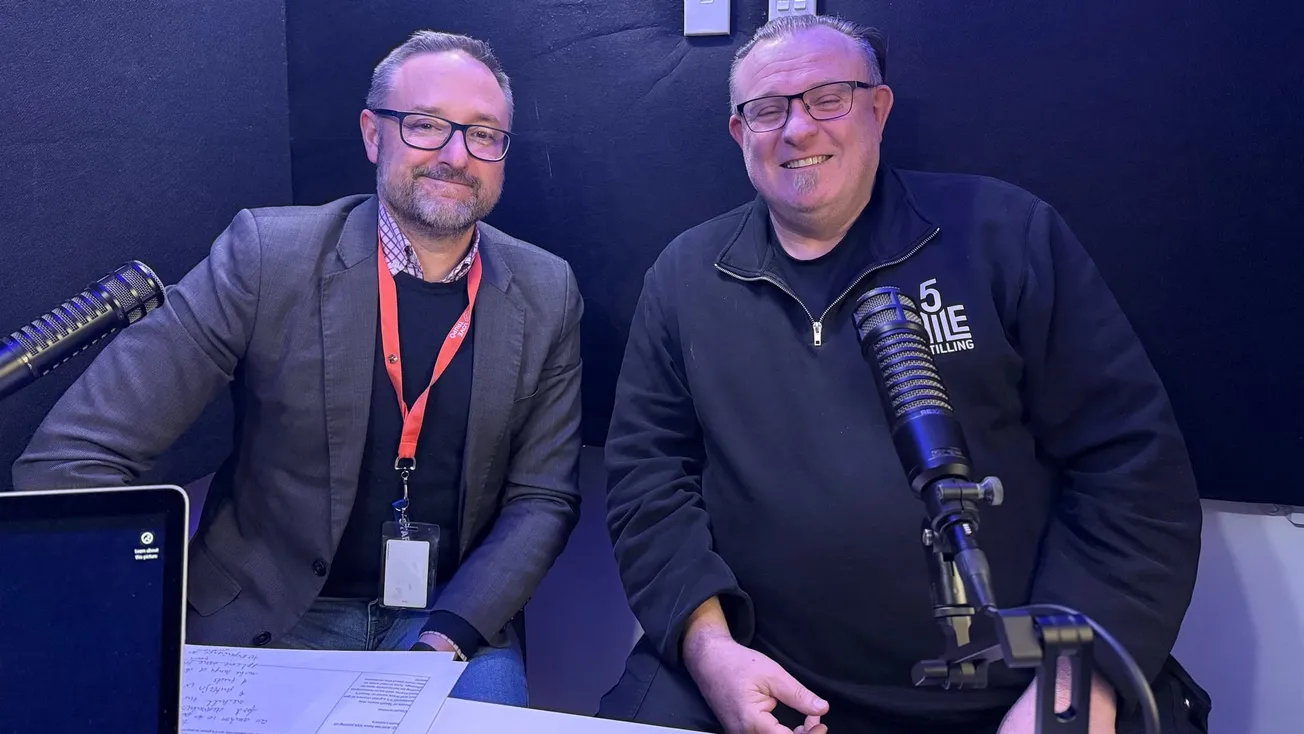
In an interview with LakeFM, councillor Steve Manunui agreed that having to look at reform proposals had been a major distraction.
"We've had to put pretty much all of our usual business (BAU) to the side."
He said local body reform was touted as rationalising local government and reducing cost.
"I just want to make it clear to our community that this isn't really simplifying it. Also, want to make it clear that if central government are selling this, that there's going to be savings and efficiencies for our rate payers, I also can't see that happening."
He said many other district councils were probably also pushing a decision out as far as possible.
"And that's really because it seemed like an impossible task with the given time frames originally. As we've progressed through this process and an ever-changing… landscape, we're definitely getting squeezed for time as we do try and land on an option."
Weighing up the neighbours
He said Taupō had saved itself money with some solid in-house financial reporting work, but other councils' financial positions weren't necessarily an open book.
"There's a due diligence piece around what does the neighbours' infrastructure look like, what do their finances look like, debt, et cetera. These are all layers below… which pieces of the jigsaw puzzle do we want to put together?"
Some districts were going to be a lot more appealing and viable to amalgamate with, he said.
"Once again, I'd fly the flag for Taupō and our community. We're a pretty vibrant community. We're in an okay space with our debt. We've definitely, when you look across other councils, got really good infrastructure on the ground so I think we would be quite appealing for some of the neighbours…
"Everyone's trying to make these decisions (but) they aren't really having full autonomy to go and see what's happening. There's no necessity for disclosure from anyone. So certainly, a little bit of guesswork."
Even after working through the options some might not be viable if the neighbours didn't "want to play ball," he said.
But at least the council would have explored all those opportunities.
"Hand on heart we can say we tried and didn't just do nothing, because I think for those that have just resorted to the backstop, I think they've done their communities an injustice."
Community engagement
Funnell said the process had been a worthwhile exercise to meet with fellow mayors and elected members from other councils.
"What is obvious is that all the other councils are having to make the same difficult decisions."
He said he and the councillors were grateful for the high level of interest and engagement the community had shown in the reforms including over 1100 people who responded to the council's survey; and the many discussions at councillor connect forums and representative group meetings.
"What has come through loud and clear is that people are protective of our district and its identity, our assets and our ability to make decisions for ourselves. We have taken that feedback on board and it will be front of mind as we prepare to make a decision on July 28.
"The councillors and I are focused on getting the best outcome we can achieve for everyone in this district."
What happens next
The August deadline might only be the start of an amalgamation process, said Manunui.
"Hopefully, once all the proposals are put in, potentially sanity may prevail and Wellington may come back and say, 'hey this is working in this area, it looks like this area needs some more time.'"
However, he repeated his opinion that reform wasn't "necessarily going to simplify things and as it sits or what we're seeing it certainly isn't going to present any massive savings at this stage. So, it comes back to the question of what… central government are trying to achieve."
The council meeting on Tuesday, July 28 will be in the Council Chambers at 10.15am. It is open to the public and will also be recorded and livestreamed on council's YouTube channel.
More information about local government reform can be found at taupo.govt.nz/ourfuture.