Written by: Bronson Perich
The first fertiliser factory for the Taupō District was opened last week.
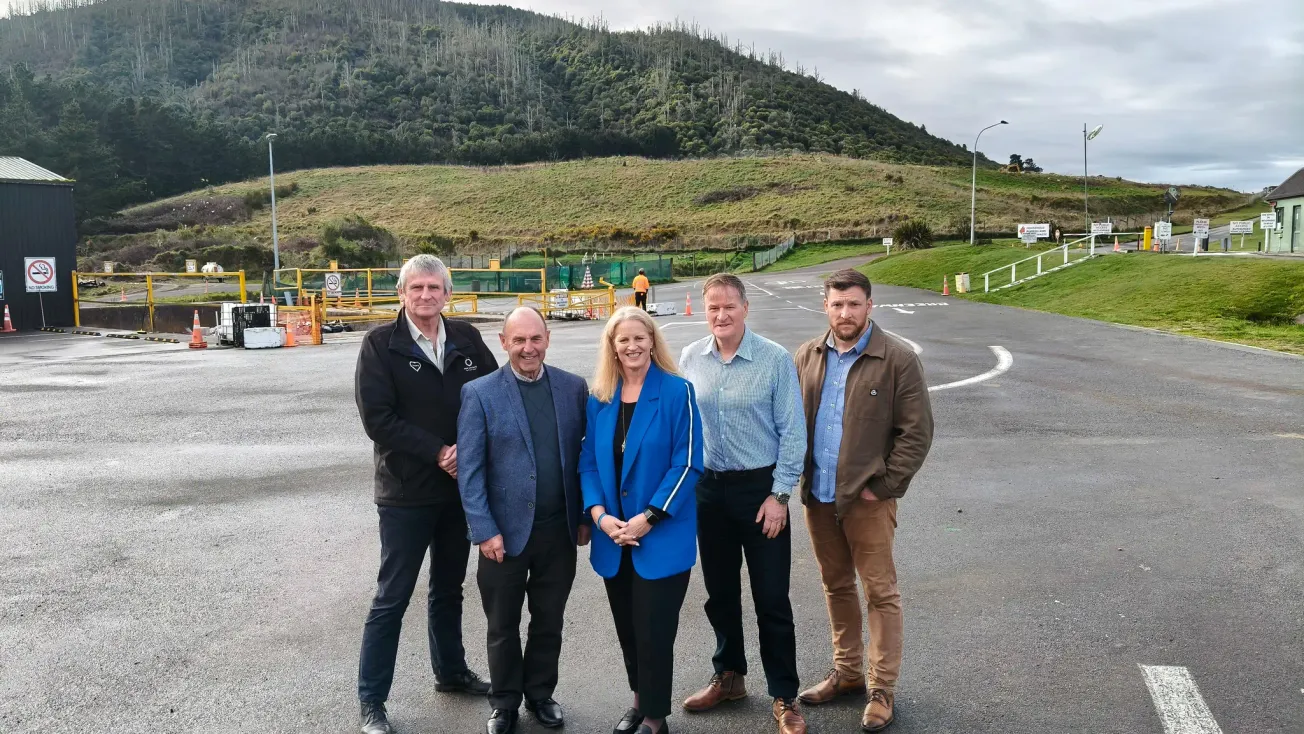
Agriculture Minister Todd McClay attended the opening of the Tnue factory at He Ahi, a hapū-owned eco-business park at Rotokawa.
The factory takes off-the-pallet urea and employs geothermal heat to coat it with a membrane that delays the release of nitrogen into farm soils.
Tnue said this is how their products could help farmers get higher yields using less fertiliser.
This proprietary membrane is how Tnue fertiliser increases yield from less urea.
Construction of the factory started in 2024 and took 18 months to build.
Tnue co-founder Bruce Smith said when construction started, he didn’t know that they would open their factory in the middle of a global fertiliser supply crisis.
“Having the resource to apply controlled release technology to fertiliser right here gives New Zealand farmers greater certainty over price, supply and on-farm performance,” Smith said.
Tneu Technical Manager Jane Mayo said at any given time, up to half of the world’s food supply is produced with synthetic petro-chemical products such as urea.
She said while it’s impossible to eliminate the need for urea, Tnue can reduce a farmer’s overall urea usage.
“Soluble urea causes a spike in nitrogen levels, but Tnue breaks down over 2-3 months,” Mayo said.
“One application of Tnue could last over the same period as two normal applications of urea.”

Local farmer sees potential
Taupō East Rural Ward Councillor Kylie Leonard farms 300 hectares just out of Taupō township.
The proximity of her land to the lake shore means she has to restrict her use of urea, in case the excess nitrogen seeps into the water.
“We have limits within what we can and what we can’t do within the Lake Taupō catchment,” she said.
Leonard previously co-chaired the Lake Taupō Protection Trust, which reduced nitrogen levels in New Zealand’s largest lake by 20% by creating the world’s first nitrogen emissions trading scheme.
Farmers operating on or near the lakeshore were compensated for reducing nitrogen leaching into the water.
While the Protection Trust achieved its mission, the need to reduce nitrogen continues, something which Tnue-modified urea could help with, Leonard said.
“The ... [reduction] of having to have trucks or helicopters on farm because you’ve got that slow-release option, the fact that it’s not water activated, that it’s actually heat activated ... means that plants are able to uptake it versus ... just releasing and not maximising the economic benefits of what we’re applying.”
Re-using geothermal taonga
Smith said it’s important for Tnue to have access to clean energy to make his product.
This eliminated a lot of potential sites for his factory, but it made Tauhara hapū-owned He Ahi an ideal choice.
“It matched with our values,” Smith said.
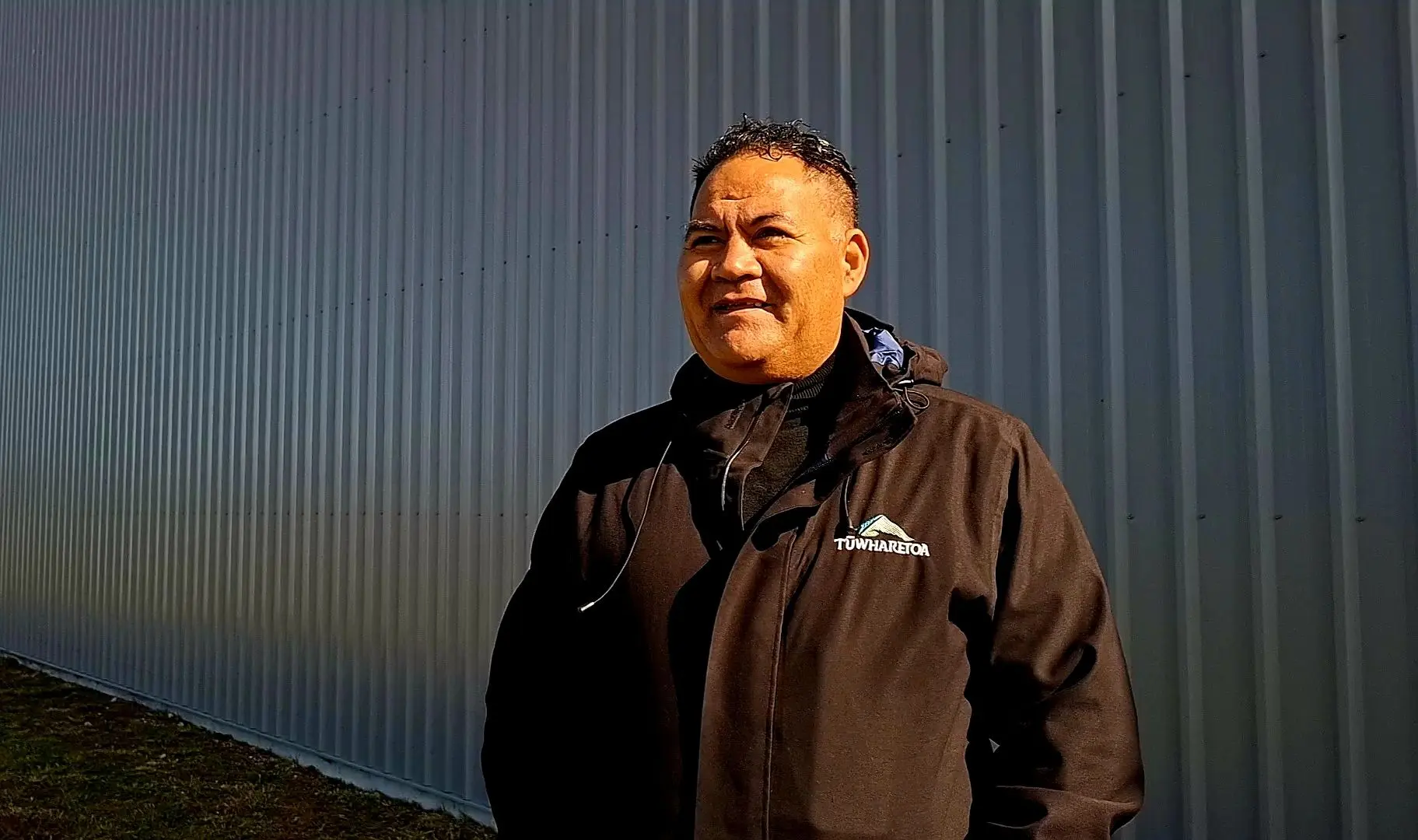
Ngahere Wall, speaking for He Ahi, said lessees had access to repurposed geothermal steam as an energy source.
“Some of the surplus energy we can tag to some of the businesses that want to be located here at He Ahi ... for energy efficiencies, for heating purposes or whatever they need for their businesses,” Wall said.
“I think all these things show positive aspects in terms of minimalising negative environmental impacts.”
Tnue and He Ahi have entered a joint venture of sorts, where the building belongs to He Ahi, but the production line belongs to Tnue.
There are currently nine employees working at the factory, and Smith said there is potential to double that number once production reaches full capacity.
Wall said Tnue also had the option of leasing more space at the business park, should they wish to expand.